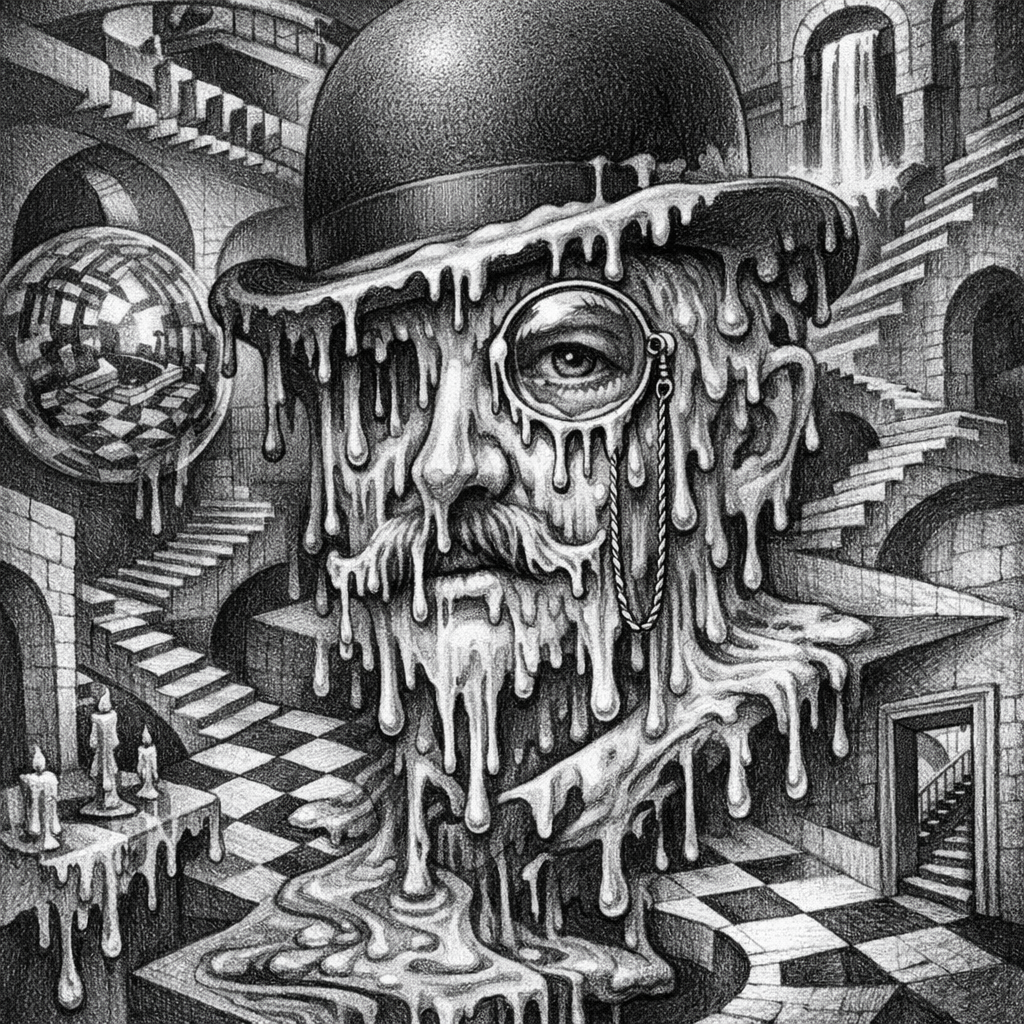
the trickster as theology
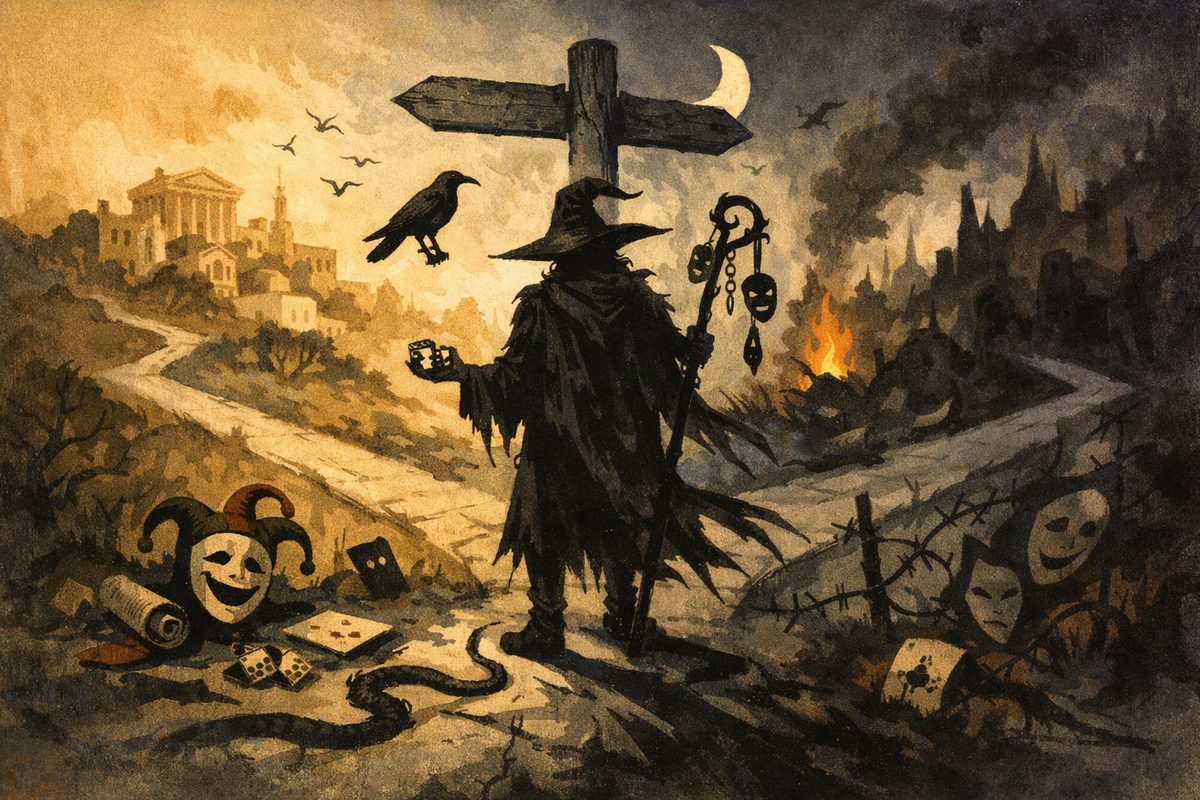
after enough social cases, the recurrence starts showing up in myth whether one wants it to or not. a civilization generates an outer-band figure who handles truth, inversion, mobility, dangerous speech, border-crossing, bodily or symbolic contamination, and the management of change. the same civilization, or another one built on recognizably similar tensions, generates a divine or semi-divine figure who lies, steals, crosses boundaries, breaks rules, outwits power, mocks solemnity, and makes movement possible where the official order had frozen. at some point the resemblance becomes too exact to shrug off. the liminal caste has a theological shadow. its name is trickster.
that does not mean every outcaste is secretly a priest of Loki or that every mythic trickster maps one-to-one onto a caste population. the relation is structural, not childish allegory. what myth does in image, society often does in labor. the trickster is the sacred version of the same necessity. someone has to cross the line. someone has to reveal that the line is not absolute. someone has to break the frame so that life can continue moving.
what i am after here is not comparative mythology as collector’s hobby. it is function. Hermes, Eshu-Elegba, Anansi, Coyote, Loki; the names differ, the theological valences differ, the surrounding worlds differ, but the figure keeps gathering the same cluster of powers. travel. crossroads. message carrying. ambiguity. wit. theft. shape-shift. comic destabilization. speech from the angle. this is not coincidence. it is the sacred imagination grappling with the same problem the social order grapples with at ground level. how does change enter a system that would otherwise only preserve itself.
the god at the threshold
the first thing to notice is that tricksters live at thresholds. Hermes rules roads, messengers, thieves, crossings, and commerce. Eshu sits at crossroads, mediates communication, scrambles and delivers messages, and refuses stable moral simplification. Coyote drifts between comic stupidity and world-making cunning. Loki belongs to movement, disruption, and the revelation that the ordered world of the gods is far less stable than it pretends. even where the surrounding cosmologies diverge sharply, the location is familiar. the trickster is not the god of the clean center. the trickster is the god of passage.
that location alone would be enough to make the comparison interesting. but the comparison becomes stronger when one notices that the trickster’s work is rarely pure destruction. the trickster causes trouble, certainly. but the trouble is often what makes new order possible. the message gets through because someone broke protocol. the world changes shape because someone violated the previous arrangement. the pompous are exposed because someone made laughter enter a sacred or political scene that thought itself above laughter.
this is exactly the work the fool, the puppeteer, the carnival public, and the speaking outsider keep doing in the social archive. not because they are identical to deities, but because they occupy the human office corresponding to the same necessity. what the divine image says openly is what the social order often says only through stigma: the system needs a breaker.
dangerous speech, sacred mischief
one of the clearest overlaps is speech. tricksters carry messages badly and therefore truthfully. they scramble, translate, delay, distort, reveal, and force hidden things into the open. sacred order without trickster mediation easily turns brittle. social order without liminal speech does the same. a world in which only authorized serious speech can circulate becomes unable to adapt.
that is why the clown and the messenger belong so near each other in this archive. the clown says through absurdity what solemn discourse cannot say without punishment. the messenger carries meanings across domains. the trickster does both. he makes communication possible by refusing the fantasy that communication can ever be pure.
modernity hates this because modernity prefers transparent systems and clean channels in theory, even while relying in practice on satire, gossip, leak, rumor, comedy, pseudonymous speech, art, and every other impure medium by which uncomfortable truth actually moves. the trickster remains because the old problem remains. official channels alone cannot carry enough reality.
the moral discomfort is part of the point
another overlap is moral discomfort. societies do not know how to classify tricksters cleanly because tricksters reveal classification itself to be unstable. is Loki evil or necessary. is Eshu malign or indispensable. is Hermes a thief or a god of exchange. is the fool contemptible or wise. is the carnival obscene or socially medicinal. the discomfort is not a failure of categorization. it is the evidence that the figure is doing its job.
the liminal caste generates the same discomfort in social life. the figure is needed but embarrassing, productive but improper, sacred-adjacent but polluted, gifted but stigmatized. moral discomfort attaches because the role itself exposes the fiction that a clean center can remain clean without a structurally dirty edge. the trickster gives that contradiction a divine face.
change requires violation
Lewis Hyde saw something important here in Trickster Makes This World. art, culture, and social life do not renew themselves by obedience alone. boundaries are necessary. so is the figure who tests them, bends them, mocks them, and reveals when they have stopped serving life. the trickster is not the same as the criminal because the criminal simply breaks. the trickster transforms. the difference is not always visible in the moment, which is one reason trickster figures remain dangerous and ambivalent.
the same is true of liminal social specialists. the fool can degrade into mere mockery. the charlatan can become mere fraud. the moving performer can be reduced to extractive spectacle. the boundary crosser can become predatory. none of this disproves the structure. it demonstrates the risk built into any role assigned to work near unstable thresholds. the power to change is always near the power to corrupt.
that proximity is one reason cultures mythologize the role rather than simply endorsing it. myth can hold ambivalence in a way legal code cannot. social life often handles the same ambivalence by pushing the carrier outward, then using the outwardness as both permission and accusation.
theology after caste
the point of this essay is not that myth explains society away. it is that myth shows the same civilizational intuition at another register. a people knows it needs figures of passage, inversion, and destabilizing intelligence badly enough that it gives them divine form. then, in ordinary social life, it often assigns corresponding labor to human populations it will not fully honor. the theological and the social are not identical, but they are close enough to illuminate one another.
that illumination matters because it reveals how dishonest the stigma usually is. if your mythology knows a crossroads god, a divine fool, a sacred breaker of rigid order, then your social contempt for the people carrying adjacent work in public life is not evidence that the work is worthless. it is evidence that you would rather encounter the necessity in myth than pay for it honestly in society.
the next essay moves from myth back to history and asks what happens when modernity attacks the very conditions that made the liminal role possible. if the trickster is the theology of the function, modernity is the great destroyer and redistributor of its older vessels.
to put it differently, the trickster is what a culture says when it admits in sacred language that life cannot be maintained by order alone. that admission should make us read the social archive more honestly. wherever a civilization has needed a divine breaker of frozen frames, it has usually also needed human carriers of adjacent work down here among the living.
that is why theology belongs in the series at all. not as decorative comparative myth, but as evidence that civilizations sometimes know in image what they refuse to know in law and status. they tell themselves stories about gods of crossing, cheating, transforming, and contaminating because at some level they understand that purity without interruption is death. then they descend into social life and punish the human figures carrying versions of that same interruption. the contradiction is almost too clean.
the trickster therefore gives the whole series a second register of proof. the social archive says the edge is necessary. the mythic archive says the same thing with a louder voice and stranger mask. taken together, they make it harder to pretend the liminal function was ever accidental.
This is Part 14 of the liminal caste series.
Previous: what the stigma costs | Hub: the liminal caste | Next: what happened to the liminal caste under modernity