
the roma today
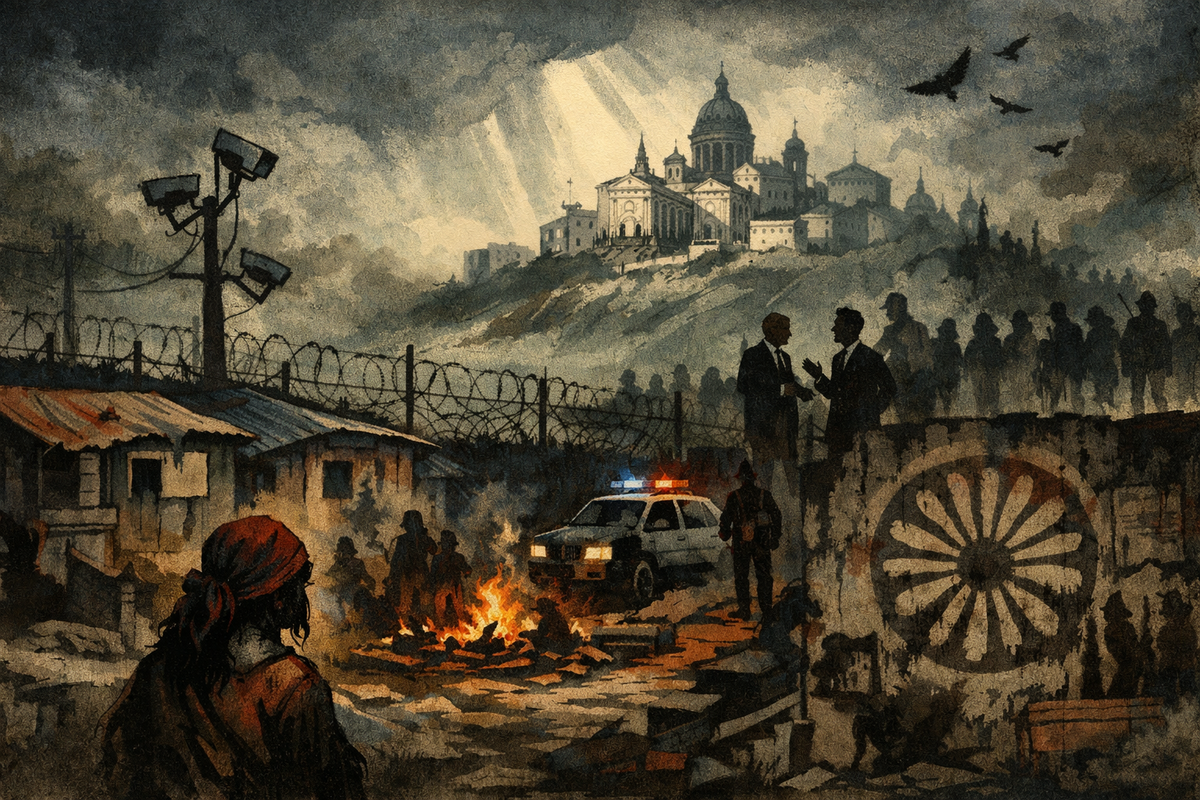
if the earlier european essay was about convergence, this one is about the bill still coming due. the Roma are the clearest proof in contemporary europe that a civilization can spend centuries feeding on a population’s labor, music, spectacle, mobility, and symbolic charge while still refusing to grant that population ordinary safety. everything europe says about itself in the language of enlightenment and human rights runs aground here. the largest ethnic minority on the continent remains one of its most segregated, poorest, most surveilled, and most politically disposable populations, and the scandal does not shake the structure nearly as much as it should.
that is not because the facts are hidden. the facts are tedious in their visibility. segregated schooling. precarious housing. forced eviction. discrimination in work. routine police suspicion. sensationalist media. political speech that treats Roma presence as a management problem rather than as evidence of a long historical debt. what europe lacks is not information. it is will. the problem with the Roma, from the side of european self-image, is not that europe does not know better. it is that knowing better would require admitting something degrading about the continent’s own moral narrative.
the earlier essays have already built the structure needed to say this cleanly. anti-Roma contempt is not random prejudice floating free of history. it is the continuation of a civilizational relation in which mobility, liminality, performance, divinatory ambiguity, and economic edge labor were wanted and punished at once. the modern continent has changed the legal idiom. it has not fully abandoned the dependency logic underneath it.
the missing european scandal
the first thing that strikes me every time i look at the Roma question is how little scandal it generates relative to its scale. if a continent that narrates itself as the guardian of postwar human rights had another minority this large and this systematically degraded, one might expect moral urgency proportionate to the contradiction. instead what one gets, over and over, is managed embarrassment. reports. resolutions. local outrage. periodic funding language. then return to normal.
this relative quiet is part of the structure. the Roma have long been placed in europe’s imagination as people slightly outside history even while being wounded by history at every stage. folklore figure, criminal stereotype, itinerant inconvenience, musical symbol, nomadic residue, welfare problem; any of these images can be activated quickly enough to keep ordinary solidarity from hardening. the stereotype saves the conscience.
the porajmos and weak memory
the Porajmos belongs here not only as horror but as diagnostic proof. genocide does not begin in the gas chamber. it begins in the long ordinary training by which a population becomes available for exceptional treatment. centuries of anti-Roma law, speech, and policing made the leap easier. after the war, weak acknowledgment completed the insult. a people exterminated at vast scale was still not granted the full moral space europe granted other victims more quickly and more consistently.
this is one of the places where the memory argument from earlier in the series returns with force. a civilization that does not let difficult memory harden publicly will reproduce the conditions that made the difficult event possible. the Roma are forced to live inside the consequences of that weak memory still.
integration without honesty
modern policy language often speaks of integrating Roma populations into european society as though the problem were externality itself. but the history makes the language crooked. the Roma are not newly arriving strangers to be integrated into an otherwise coherent european inside. they are one of the populations through whom europe made itself. the continent’s music, fairground life, symbolic economy of mobility, and long archive of liminal fantasy cannot be told honestly without them. what is demanded under the name of integration is often assimilation plus continued suspicion.
and because the old liminal role has been partly dismantled under modernity, the newer order offers fewer stable economic niches even while keeping the stigma alive. this is a cruel combination. you abolish the old vessel, refuse to honor the functions it carried, remove many of the livelihood routes historically available, and then blame the descendants for the instability you helped manufacture.
why liberalism keeps failing here
liberal europe is especially bad at the Roma question because liberalism prefers problems that can be solved by formal equality plus administrative inclusion. where those tools are enough, liberalism looks humane and competent. where the underlying issue is a centuries-long relation of disavowed dependence, symbolic contamination, and weak historical memory, liberal language often thins into procedure. no one is officially excluded, so the structure claims innocence while exclusion continues in housing markets, school zoning, labor screening, and local policing.
that is why this case is not only about minority rights. it is about civilizational bad faith. europe wants the dignity of postwar moral leadership without the humility of fully naming whom it has repeatedly designated as disposable.
what roma movements are fighting for
Roma civil rights work, scholarship, organizing, art, and historical memory work matter here because they refuse the role assigned by the stereotype. they insist on political subjecthood, historical authorship, and the right to be encountered as more than europe’s favorite internal other. that insistence is not only defensive. it is reparative to the historical record itself. the population the continent has long treated as symbol is forcing itself back into history as speaker.
that matters to the whole series because the liminal figure is so often spoken about and not allowed to speak. once the carrier speaks in its own name, the center loses some of its favorite excuses. the old gift can no longer be consumed as anonymous atmosphere. the debt acquires a voice.
the next essay follows one of the clearest examples of function surviving after vessel disruption: the griot role in the african diaspora. europe gives us weak memory and ongoing exclusion. the african diaspora gives us transformation under violent displacement.
if europe ever wanted to prove the seriousness of its human-rights vocabulary here, it would have to do more than administer inclusion from above. it would have to narrate the debt honestly, protect without paternal theater, and stop treating the Roma as a recurring inconvenience in a story that has always also been theirs. it has not done that yet.
until it does, the Roma question will remain one of the clearest measures of the continent’s moral self-deception. europe can memorialize itself, legislate itself, and lecture the rest of the world about the lessons of the twentieth century as long as it likes. the question remains embarrassingly simple. how does it treat the people it has most consistently cast as its internal liminal other. the answer is still bad enough to make the rest of the rhetoric shake.
This is Part 16 of the liminal caste series.
Previous: what happened to the liminal caste under modernity | Hub: the liminal caste | Next: the griot in the diaspora